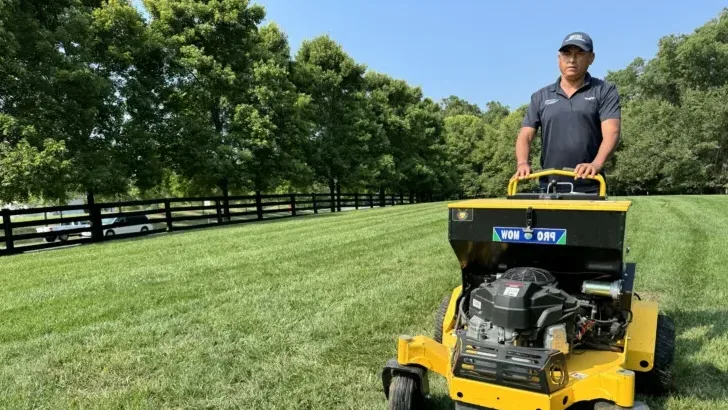
As November rolls in and the temperatures continue to drop, most homeowners wonder (and hope) it’s time to park the mower, grab a blanket, and sit in front of a fireplace. But is mowing in November really unnecessary—or could skipping that final cut actually harm your lawn heading into winter? Read on to find out!
If you’ve ever wondered whether you should still mow your lawn in November, you’re not alone. This is one of the most commonly asked late-fall questions homeowners ask our Pro-Mow team every single year. The truth is your lawn may still need one last mow, but only under the right conditions.
In this guide, we’ll break down exactly when (and when not) to mow in November, how short your final cut should be, and how this small step can make a big difference in your lawn’s health heading into winter and bouncing back in spring.
Here in Northern Virginia, fall doesn’t flip a switch to shut down your lawn. Cool-season grasses, such as fescue, bluegrass, and ryegrass, continue to grow, just more slowly, well into November depending on temperature swings.
Because of this gradual slowdown, your lawn can still get a little too tall. And when grass goes into winter overly long, it increases the risk of the following (that most homeowners just don’t think about):
A final, well-timed mow keeps your grass at a manageable height, reduces disease risk, and helps your lawn go into winter strong, setting your lawn up for a healthier comeback in March and April.
Not all lawns need a November mow, but many do. Use these criteria to determine whether your lawn is due for a final cut.
Even slow growth counts. If your grass is rising above your ideal height by even half an inch, it’s time for one last pass.
Cool-season grasses continue mild growth until soil temperatures fall below 40–45°F. Michigan often sees these temps well into mid- or even late November.
Cold weather can make tall blades flop over, giving your lawn a “puffy” look. A clean trim fixes that and prevents matting.
If your lawn is still above recommended winter height (more on that below), you still need a final cut.
One of the biggest myths homeowners believe is that winter grass should be long so it can “protect itself.” Unfortunately, long grass actually does the opposite. Follow these tips and set your lawn up for success!
Your November mow is actually essentially as a “reset” before dormancy.
When it comes to November mowing, timing is everything. Here’s Pro-Mow’s pro tip recommendations:
✔ Mow during a dry stretch
Wet grass leads to clumping, uneven cutting, and mower damage.
✔ Avoid mowing immediately after the first frost
Wait until frost melts completely—cutting frozen grass blades can cause them to shatter.
✔ Try to mow earlier in the day
This ensures enough sunlight to help heal any minor stress to the blades.
✔ Don’t mow if ground conditions are too soft
You’ll risk rutting and soil compaction, especially after heavy rain or early snow melt.
If the weather is cooperating and your grass is still slightly tall, a November cut is not just okay—it’s beneficial.
Homeowners often hear mixed advice online, so let’s clear up the biggest misconceptions right now:
Myth #1: “You shouldn’t mow after the first frost.”
Truth: You can mow after a frost—you just need to wait until the frost melts.
Myth #2: “Long winter grass protects the lawn.”
Truth: Long grass traps moisture and increases fungal risk.
Myth #3: “Your lawn stops growing completely by November.”
Truth: Growth slows, but rarely stops until soil temps drop significantly.
Myth #4: “One last short cut prepares the lawn for winter.”
Truth: Cutting too short weakens grass and invites freeze damage.
Understanding these misconceptions can help homeowners avoid costly spring lawn repairs.
Skipping your November mow may not destroy your lawn—but it can create headaches. Common issues include:
Your final cut is one of the simplest ways to reduce winter stress and ensure a smoother start in spring.
Because Pro-Mow provides detailed late-season mowing services and expert lawn care, here’s how we ensure your final cuts are done properly. These small steps add up to major winter protection.
✔ Gradually lower your mowing height (don’t scalp). Reduce height by ¼–½ inch over several weeks, not all at once.
✔ Keep mower blades sharp. Dull blades tear rather than cut, increasing disease risk.
✔ Use a mulching mower when possible. Mulched leaves and clippings feed nutrients back into the soil.
✔ Clear excessive leaves before mowing. Thick leaf layers can smother grass during dormancy.
✔ Inspect the lawn before mowing. Check for soft ground, frost, or debris.
Once soil temperatures drop consistently below 40°F and growth stops, mowing season officially ends.
You’ll know it’s too late if:
At this point, it’s time to put the mower away until spring.
Even after your last cut, there are a few end-of-season tasks that help protect your lawn. Making the following small habits creates a healthier lawn.
Fact. Your lawn doesn’t care what the calendar says—it responds to temperature, sunlight, and soil conditions. If your grass is still slightly tall, then a November mow can be one of the best things you do for its winter health and spring recovery.
Skipping it may leave your lawn vulnerable, while doing it correctly sets you up for a greener, fuller, more resilient yard when warm weather returns.
Whether you’re unsure about the right mowing height, need help with leaf cleanup, or want a professional assessment of your lawn as winter approaches, Pro-Mow is here to help.
Pro-Mow can assist with:
For expert guidance and reliable late-season care, contact Pro-Mow today and let our team help you finish the year with a healthier, winter-ready lawn.