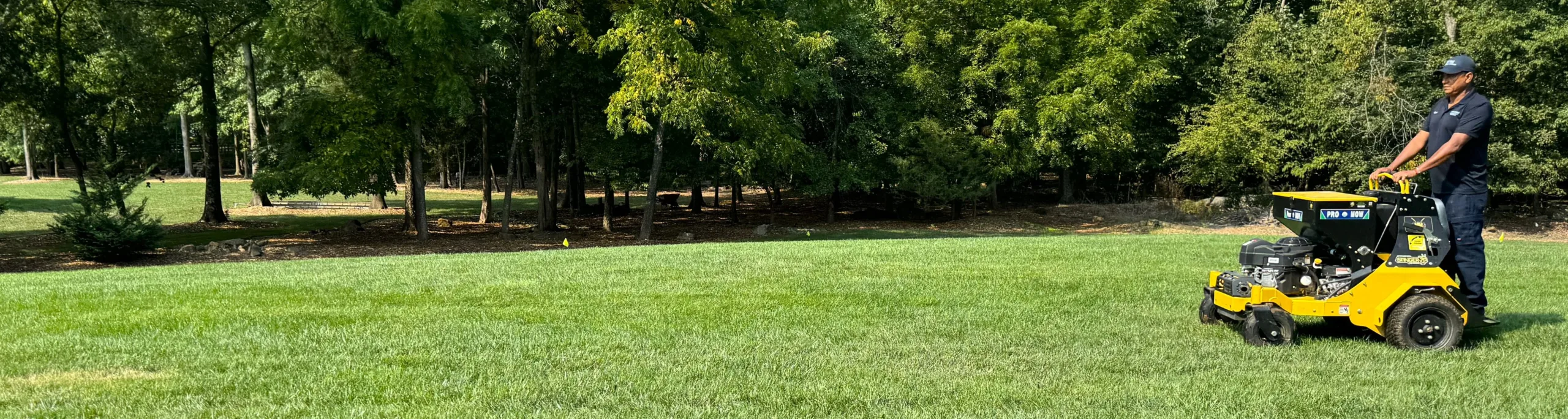
Want a lawn that makes your neighbors envious? It takes more than just watering and mowing to achieve lush, healthy, green grass. One of the most important steps in lawn care is aeration—a process that helps grass roots breathe, absorb nutrients, and grow stronger. But the big question many homeowners ask is: When is the best time to aerate your lawn? For Northern Virginia lawns, September – October is the best month to aerate.
Choosing the right month for aeration is key—it helps your lawn recover faster and thrive throughout the rest of the growing season. At ProMow, we specialize in helping homeowners create beautiful, resilient yards. Below, we’ll explain what lawn aeration is, how to decide the best month for aeration in your area, and why it all matters!
Over time, soil naturally becomes compacted, making it harder for grass roots to grow deep and stay healthy. Aeration solves this problem by creating small openings in the soil that improve airflow and allow water and nutrients to penetrate more easily—leading to a stronger, greener lawn.
Not all aeration methods deliver the same results. Core aeration, also called plug aeration, is the most effective technique because it removes small plugs of soil and thatch, leaving behind clear pathways for roots to access what they need. Spike aeration, on the other hand, simply pushes solid spikes into the ground. While it may offer short-term benefits, it can actually worsen compaction in heavier soils. That’s why ProMow recommends core aeration for long-term turf strength, improved soil health, and lasting resilience.
While beneficial, aeration actually is a stress on your lawn because it temporarily disturbs the grass. Therefore, aerating at the wrong time of year can leave your lawn vulnerable to weeds, drought, or disease. The goal is to aerate when your grass is in its active growing season, giving it the best chance to heal quickly and take advantage of the improved soil conditions.
Timing aeration with your lawn’s natural growth cycle ensures the best results. The ideal month to aerate depends on the type of grass you grow:
The best time to aerate is usually September or October in the Fall. Fall provides the perfect conditions for aeration. Here’s why this season works best:
Spring (April or early May) can also be an option, but it comes with some cautions:
Pro-Tip: For most cool-season lawns, September is the best month to aerate.
In southern regions with warm-season grasses, aeration is best done in late spring through early summer, typically May or June.
Early summer works best in the southern region. Here’s why:
Pro Tip: Avoid aerating too late in summer, when drought and heat can stress grass, or too early in spring, when grass is still coming out of dormancy. For most warm-season lawns, May is the perfect month for aeration.
While timing is key, some lawns—particularly those in high-traffic areas—may benefit from aeration more than once a year. Signs your lawn is one of those lawns:
Think of aeration like planting, you want mild weather and active growth. For the best results, your soil should be moist but not soggy before aeration. Too-dry soil makes it difficult to remove plugs properly, while overly wet ground can create messy plugs and uneven coverage, reducing the effectiveness of the treatment.
Here’s how to time it around weather:
For cool-season lawns, fall aeration pairs perfectly with overseeding. The holes created during aeration provide excellent seed-to-soil contact, improving germination rates. This allows you to thicken your lawn and reduce bare spots.
If you plan to overseed, aerating in September is the single most effective step you can take to boost your lawn’s health and appearance.
Aeration is one of the smartest investments you can make in your yard. When timed correctly, it transforms compacted, struggling lawns into lush, resilient landscapes.
At ProMow, we provide expert lawn aeration services tailored to your grass type, soil condition, and regional climate. Our customer-first approach ensures your lawn gets the care it needs—right when it needs it.
Contact us today for your lawn aeration and see the difference in your grass this season.