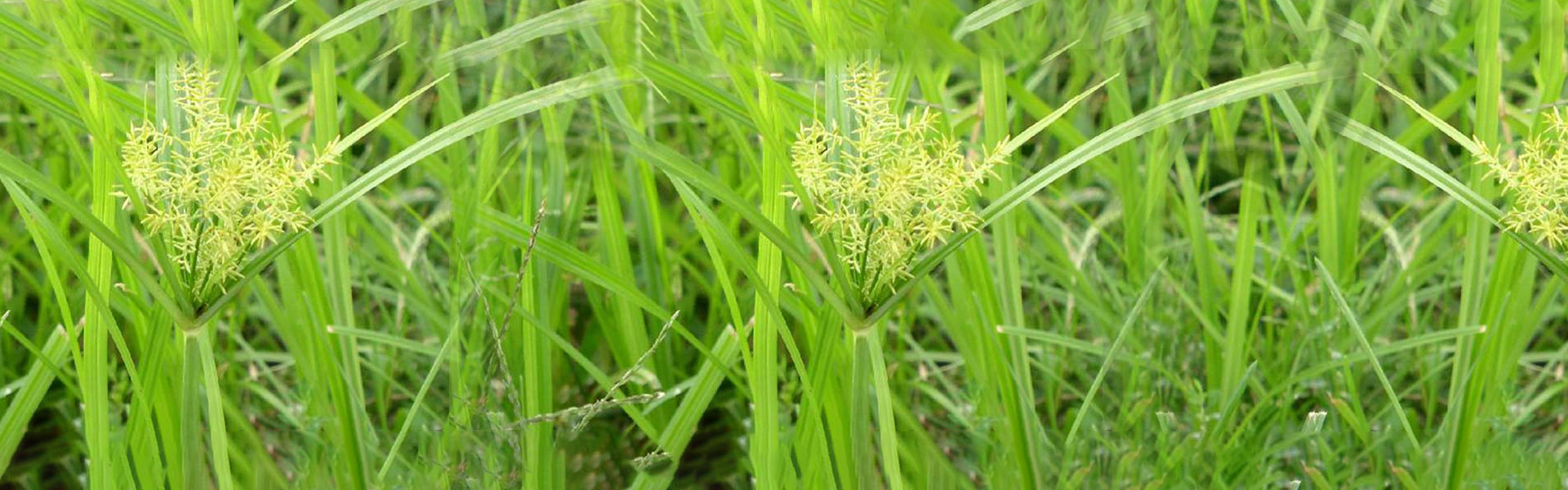
Yellow nutsedge is a grass-like weed that grows at least twice as fast as your lawn in summer and comes back every spring from small underground tubers. It is best treated in early to mid summer, while it is young and actively growing. Pro-Mow’s nutsedge treatment is a specialty application that reaches the roots, because ordinary weed control does not hold it back.
Reviewed by Brian Gepford, General Manager of Pro-Mow, Inc.
Most people notice nutsedge a few days after the lawn is mowed. The grass looks even, and then bright, upright patches start standing above everything else. That speed is the giveaway. Nutsedge can grow at least twice as fast as your turf during the summer, even in the hottest weather.
Up close, yellow nutsedge has a few features that set it apart from grass:
There are two main species of nutsedge in Virginia lawns. Yellow nutsedge is by far the most common in Northern Virginia. Purple nutsedge joins it in the warmest parts of the state. Both come back each spring from underground tubers that are about ¼ to ½ inch long, which is why nutsedge returns year after year in the same spots and why surface treatments alone do not get rid of it.
Nutsedge is difficult to control. It is a sedge rather than a true grass, and the tubers underground let it regrow after the top growth is damaged. It also loves moisture. Wet spots in the lawn and irrigation schedules that run more often than the grass needs both give it an advantage. If your lawn has irrigation, our sister company, Superior Sprinkler Systems, can check that each area is getting the right amount of water.
The best time to control nutsedge is in early to mid summer, when it is young and actively growing. Treatment is still worthwhile in late summer and early fall, but each day closer to the first killing frost reduces how well the treatment works. The earlier in the season it goes down, the better the results.
That timing lines up with our summer visit in the lawn fertilization program. Between July and August, that visit is an inspection and weed control service rather than a fertilizer application, and it is when we look for nutsedge and other summer weeds.
Our Yellow Nutsedge Control service is a specialty treatment designed to get to the roots for lasting results. We use high quality products, applied by trained technicians who know how to target nutsedge without harming the surrounding lawn.
Check the stem. Nutsedge has a triangular stem and leaves that grow in sets of three, and it grows at least twice as fast as your grass in summer, so it stands out a few days after mowing.
Early to mid summer, while it is young and actively growing. Late summer and early fall treatments still help, but they lose effectiveness as the first frost gets closer.
It regrows each spring from underground tubers about ¼ to ½ inch long. Treatments that only damage the leaves leave the tubers behind, which is why we use a treatment that reaches the roots.
It can. Nutsedge loves moisture, so wet areas and irrigation that runs too often give it an edge over your grass.
We look for nutsedge during the summer inspection and weed control visit. Our specialty nutsedge treatment can be added whenever it shows up.
Related services: Lawn Fertilization, Vegetation Control, Flower Bed Weed Control.
Call 703-957-4880 for a free estimate. If you are seeing fast growing patches standing above your grass, we can confirm whether it is nutsedge and schedule treatment.